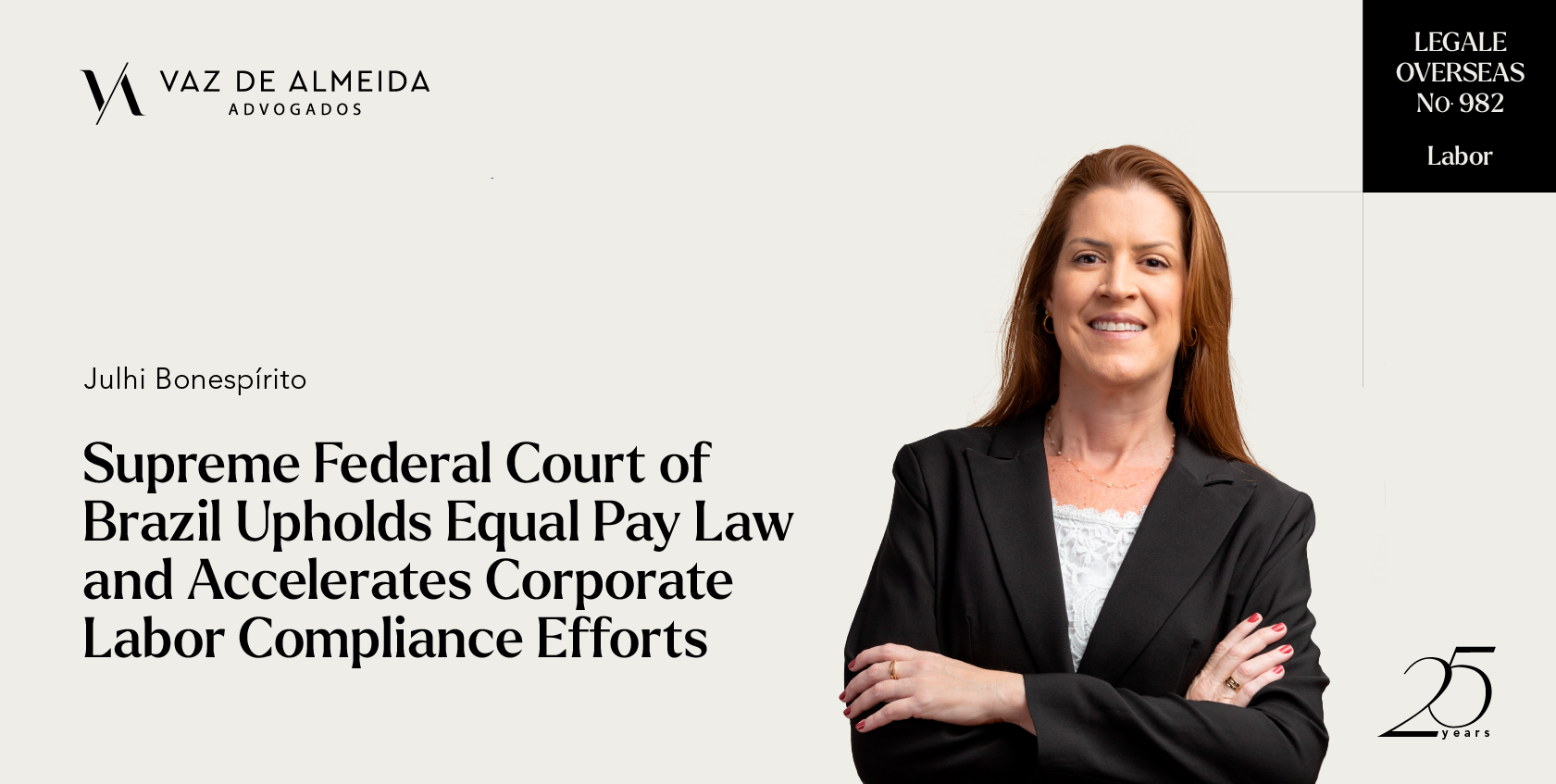
Ruling reinforces pay transparency obligations and intensifies the review of compensation practices.
By Julhi Bonespírito
Legale Overseas, no. 982.
On May 14, 2026, the Supreme Federal Court of Brazil (STF) concluded its review of the constitutionality of Law No. 14,611/2023, which establishes mechanisms to promote pay equity between men and women in the labor market.
In a unanimous decision, the Court dismissed the direct action of unconstitutionality, upholding the validity of the statute in line with the opinion issued by Justice Alexandre de Moraes. The session was presided over by Justice Edson Fachin.
The ruling consolidates mandatory structured practices related to pay transparency, compensation governance, and labor risk management, with direct impact on medium- and large-sized companies.
Key Considerations | Law No. 14,611/2023
The validation of the statute reinforces the need for immediate compliance, particularly with respect to:
- Pay transparency reports: mandatory periodic preparation and disclosure, including gender-based comparative analyses;
- Objective compensation criteria: clear, documented, and auditable structuring of compensation policies;
- Corrective action plans: mandatory implementation where disparities are identified;
- Exposure to sanctions: potential administrative and financial penalties in cases of non-compliance;
- Data protection: requirement to anonymize information in accordance with applicable data protection laws.
The decision puts an end to discussions regarding the law’s constitutionality and accelerates the review of internal practices, positioning pay equity as a central pillar of labor compliance, corporate governance, and institutional reputation.
In this context, the moment is opportune for companies to conduct diagnostics, undertake structural reviews of compensation policies, and assess regulatory compliance, thereby mitigating risks and strengthening their institutional standing with regulators and the market.
Vaz de Almeida Advogados continues to closely monitor developments in this area, contributing to the interpretation of regulatory developments and their impacts on corporate labor management.
Translation Disclaimer
This document was originally drafted in Portuguese and subsequently translated into English using artificial intelligence (AI).
—
Follow us on LinkedIn >
People & Community >
Meet Our Leaders >
Awards, Seals, and Recognitions >
News: Quality Content on Our Portal >
—
Tax Law >
Corporate Law >
Automotive Sector Relations >
Conflict Prevention and Resolution >
Labor Relations, Global Mobility, and People Management >
Intellectual Property >
ESG, Environmental, and Sustainability >
Innovation, Digital Law, and Cybersecurity >
Infrastructure, Real Estate, and Construction Law >
Administrative, Public, and Regulatory Law >
—
Our publications aim to communicate the legal perspective on relevant developments and provide context to the most significant legal events that may affect companies and organizations. Specific cases require personalized technical attention to the facts and should seek customized legal advice before taking any legal or paralegal action. If you, your company, or your board of directors need counsel, contact a trusted attorney.
«Legale», «Legale Overseas», «Articles», «Especial», «Tax Panel», «Tax Alert», «Projects» e «News & Alerts» are periodic publications intended as a service to the business community. These materials may include links to third-party websites to facilitate access to referenced services and publications. However, we are not responsible for the integrity of third-party links, which may encounter issues such as server failures, network security vulnerabilities, or other accessibility problems.