The Supreme Federal Court (STF) and the Superior Court of Justice (STJ) are making progress on digital and contractual matters, while other discussions remain under consolidation.
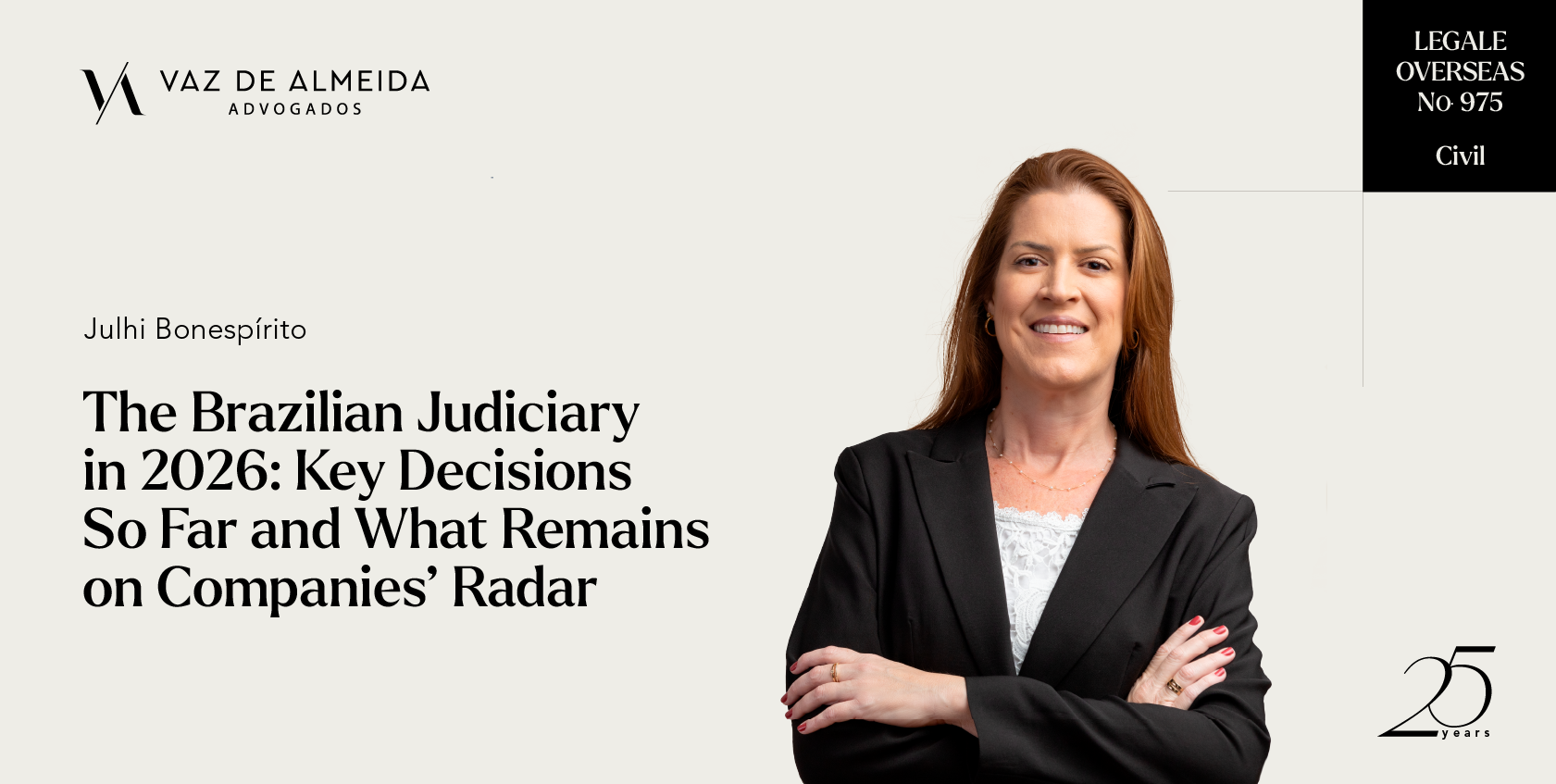
By Julhi Bonespírito
Legale Overseas, no. 975.
The year 2026 has been marked by relevant decisions issued by Brazil’s Supreme Federal Court (STF) and the Superior Court of Justice (STJ) in civil matters, with direct implications for companies’ operations. In the first quarter, the courts addressed issues such as the liability of online platforms, electronic contracts, and the use of digital evidence, while other discussions remain at a stage of ongoing definition or jurisprudential consolidation.
Among the decisions already confirmed, particular attention should be given to the application of the STF’s new understanding regarding the liability of digital platforms for content published by users. Although the judgment was concluded in 2025, its effects are already unfolding in the current regulatory landscape, requiring platforms to adopt more proactive preventive measures in relation to serious unlawful content. The discussion has now entered a phase of practical adaptation by companies.
In the field of digital contracting, the STJ took an important step forward in March 2026 by recognizing the validity of electronic signatures executed outside the ICP-Brasil certification system, provided that there is sufficient evidence to demonstrate the authorship and integrity of the document. This position reinforces legal certainty for contracts executed in electronic environments and aligns with the realities of commercial relationships in the digital context.
Another relevant point concerns the use of digital evidence. In February of this year, the STJ established that, where there is doubt as to the authenticity or integrity of electronic records, technical expert examination is required. This guidance contributes to strengthening reliability standards in the production and use of this type of evidence, now widely present in both corporate litigation and consumer disputes.
On the other hand, certain matters remain unsettled at this time. Civil liability related to the use of artificial intelligence and automated decision-making, in light of Brazilian Data Protection Law (LGPD), continues to be assessed based on consolidated precedents, without the issuance of a new landmark ruling in 2026 so far.
A similar situation exists with respect to the requirement of prior attempts at extrajudicial dispute resolution in consumer relations. Although this trend can be observed in isolated decisions, the issue has not yet been addressed through a binding thesis or a repetitive proceeding this year.
Vaz de Almeida Advogados continuously monitors the decisions of Brazil’s higher courts and the evolution of matters still under review, enabling the firm to advise companies and partners on both consolidated changes and emerging trends that are likely to shape the legal landscape throughout 2026.
Translation Disclaimer
This document was originally drafted in Portuguese and subsequently translated into English using artificial intelligence (AI).
—
Follow us on LinkedIn >
People & Community >
Meet Our Leaders >
Awards, Seals, and Recognitions >
News: Quality Content on Our Portal >
—
Tax Law >
Corporate Law >
Automotive Sector Relations >
Conflict Prevention and Resolution >
Labor Relations, Global Mobility, and People Management >
Intellectual Property >
ESG, Environmental, and Sustainability >
Innovation, Digital Law, and Cybersecurity >
Infrastructure, Real Estate, and Construction Law >
Administrative, Public, and Regulatory Law >
—
Our publications aim to communicate the legal perspective on relevant developments and provide context to the most significant legal events that may affect companies and organizations. Specific cases require personalized technical attention to the facts and should seek customized legal advice before taking any legal or paralegal action. If you, your company, or your board of directors need counsel, contact a trusted attorney.
«Legale», «Legale Overseas», «Articles», «Especial», «Tax Panel», «Tax Alert», «Projects» e «News & Alerts» are periodic publications intended as a service to the business community. These materials may include links to third-party websites to facilitate access to referenced services and publications. However, we are not responsible for the integrity of third-party links, which may encounter issues such as server failures, network security vulnerabilities, or other accessibility problems.